sudo alien -d bigfuckinmistake.rpm

Please correct my English.
The lemming formerly known as:
- 0 Posts
- 18 Comments
Joined 1 year ago
Cake day: December 31st, 2024
You are not logged in. If you use a Fediverse account that is able to follow users, you can follow this user.
bigfuckinmistake.rpm
Install appimages easily with gearlever
How many AppImage managers are there now?
 1·5 months ago
Okay, sure. Are you saying the feature was actually removed entirely? The article makes it sound like it is just disabled by default now, but still exists.
Another major change disables Imgur uploads by default. The developers cite privacy concerns about users accidentally sharing sensitive screenshots on public platforms.
Am I misinterpreting this, or does this imply that older versions of Flameshot automatically uploaded all screenshots to Imgur?
 1·5 months ago
Most people? Is that true?
Subscription price is increasing this autumn.
 6·5 months ago
I do coke
So I canwork longerbe thinner
So I can earn more
So I can do more coke
 26·5 months ago
I remember before the Steam Deck was released, and people were discussing all the potential capabilities of the upcoming device, it was often asked if this might be a feature. Of course, there were the usual “It’s a PC, so yes” answers, but the more accurate answers along the lines of “If it’s not, someone will make it work” are finally coming true now.
Haven’t had much opportunity to have nails driven into my testicles.

And nope, not named after the Farscape character…
https://aerynos.com/blog/2025/02/14/evolve-this-os/
Pronounced like “Erin”, it’s a name that we feel is more befitting of the project. Pulling from multiple etymologies, it’s a name that better describes the project now versus the project that started as Serpent OS.
“Aer” is rather obvious, Latin in origin. The phonetic “Erin” is a nod to the Irish roots of the project, and of course a home. There are a number of reasons for the name, which will form part of the initial documentation on the new website.
Our intent is to have a name that is more inviting, and more descriptive of the project’s goals and aspirations. We’re not anti-establishment or anti-corporation - if anything, we’re a statement that without the fiscal handcuffs, we can produce a technically sound and user-friendly operating system.
https://aerynos.dev/aerynos/faq/
What does AerynOS mean and how do I pronounce it?
AerynOS is a stylised spelling of “Erin”, alluding to the project’s Irish roots. It is pronounced exactly the same as “Erin” - “AIR-in” OS. It’s also a play on “aer” and the phonetic “air” sound, indicative of our desire to produce an open, trusted and high-performance operating system.
It’s pronounced as “AIR-in” OS.
 6·6 months ago
Is this experience at Walmart specifically? The only store I go to regularly that has self-checkout machines is a local grocery store and I love them. No issues for me.
 6·6 months ago
Lemmy seemed to parse that as two separate hyperlinks for me. This should work as a simple clickable link 🤞 https://web.archive.org/web/20240926051545/https://forum.makemkv.com/forum/viewtopic.php?f=16&t=19634
There doesn’t need to be any evidence. This is something that is impossible to prove one way or the other, like Last Thursdayism.
Yes, this particular incident.
https://en.wikipedia.org/wiki/XZ_Utils_backdoor
In February 2024, a malicious backdoor was introduced to the Linux build of the xz utility within the liblzma library in versions 5.6.0 and 5.6.1 by an account using the name “Jia Tan”.[b][4] The backdoor gives an attacker who possesses a specific Ed448 private key remote code execution through OpenSSH on the affected Linux system. The issue has been given the Common Vulnerabilities and Exposures number CVE-2024-3094 and has been assigned a CVSS score of 10.0, the highest possible score.[5]
Microsoft employee and PostgreSQL developer Andres Freund reported the backdoor after investigating a performance regression in Debian Sid.[8] Freund noticed that SSH connections were generating an unexpectedly high amount of CPU usage as well as causing errors in Valgrind,[9] a memory debugging tool.[10]
Immediately get noticed
Realistically, though, we are only aware of that one because it was noticed in that unlikely scenario and then widely reported. For all we know, most open source backdoors are alive and well in our computers, having gone unnoticed for years.
Also the internet icon shows there is Internet.
Looks to me like the icon that indicates the machine being connected to a network, but that network is not connected to the Internet.
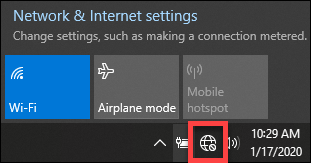
Let’s see how well I do: