- 64 Posts
- 48 Comments




 1·5 months ago
The best thing about their centos strategy changes was the creation of Alma Linux
I do not use it as my default text editor but I use it practically every working day. Plenty of times it’s the only thing I have available to me. Pretty often vi is all I have to work with

I and I imagine barely anyone ever heard of Codeberg until the past year like me when I made an account and the website was loading at a snails pace. Github, Gitlab, and Bitbucket are way more established.
Every employer I’ve worked for either uses Github, Gitlab, or Bitbucket in that order of commonality. Then any that self hosts uses Gitlab either free or Ultimate. I imagine anyone writing pipelines would like to stick with what they’re comfortable with. I imagine migrating gitlab ci to foregejo actions can be annoying especially on huge projects unless you’re already using something like Tekton to build out your own CI pipelines. How I see my project managers use Gitlab Ultimate features to link together issues, milestones, commits, merge requests, branches, epics, create filters for the issues boards, etc - I’m impressed.
A lot of co-mingling between different groups within the organization to create some levels of siloed operations. There’s stuff like sharing user databases between Gitlab and other products that aren’t gitlab. API stuff where you make a gitlab account and it propogates to other services and that even includes stuff like group management in gitlab and other services non-gitlab. A bunch of stuff that I barely have to work to achieve like getting sonarqube or other services to easily integrate into Gitlab pipelines and create conditional actions in them and the merge requests comments to notify developers of findings. I have no doubt used very little that’s out there that offers easy integration into Gitlab and Github workflows.
Our pipeline inserts milestone links into our changelogs. We use the Gitlab project wikis and release pages. We use the gitlab package and container registries. Self hosting runners is super easy. There are a lot of 3rd party services that host github and gitlab runners that are really click and they’re ready to go. I don’t have enough experience with Codeberg yet but Gitlabs CI file text editor and the browser embedded VS Code I find very useful.
On Gitlab, these are very useful. I’d want something similar on codeberg rather than dealing with all that myself along with other key/token management
https://docs.gitlab.com/ci/variables/predefined_variables/
For the most part, I would expect people to go where they’re most familiar and at work they’ll be most familiar with Github and Gitlab and if you want your code to be seen, you’ll go where the bulk of developers are


 31·5 months ago
I did not make an argument for why you would not make the purchase. I’m making the argument that it won’t be scarce later in the year because gamepads for PC don’t sell in the volumes like consoles. They’re not used at volume as consoles. People will buy it. People that already have gamepads are less likely to buy it, but they may still buy it. I am addressing the OP who is asking opinions on likelihood of the controller being scarce later in the year
I didn’t say it would be a rare thing. The question is whether someone believes the steam controller will be hard to get later in the year as stated in the OPs post. I do not believe it will be hard to get
what percentage of the 10 million people do you expect to buy a steam controller and how much would that compare to playstation, nintendo and xbox owners? That’s 10 million steam gamers that already have gamepads to play on steam and the other 85% playing with I’m assuming mouse and keyboard. PS5 has sold ~100 million where each package in a gamepad plus all the additional that you see in stores and have been purchased. Do you believe this steam controller will be hard to find and why? It seems to me that the manufacturing of gamepads is not a struggle considering how many are available and that the steam controller has a release date already rather than the machine or frame
I’m certain it won’t be a problem past a month. Primary input on PC is mouse and keyboard. The primary users for this gamepad will be steam machine owners. The controller for now requires steam. Some sunset of ~150 million people will buy this. I’d be surprised if this sold to even 10% in 5 years. It’ll be competing with the likes of 8bitdo and others that while they may have less buttons, no trackpad, it’s the amount of buttons devs design around. Steam controllers until they become overwhelmingly popular along with other controllers that mimic it, those rear buttons won’t be essential for gamepad native games. Steam controllers have nice to haves rather than being the minimum needed. Vast majority of gamers would be served by a $30 8bitdo perfectly well for their uses
I’d expect the PlayStation and Xbox regular first party controllers and maybe even the premium first party consoles controllers to sell more than this and they don’t seem to have supply problems. Those are essential to the console experience. Steam controller is not to PC gaming
Media coverage of Linux today is wildly different than the 2010s. It used to be vitriol to entertain the idea of using Linux. It was hoping that complaining about Windows enshittification and Apple pricing while still buying them would produce any results. More and more people will learn that they don’t need the software they grew up with for their hobbies or indie projects. Don’t need o365 to write your novel
I suppose so. I’d rather they spell it out for simple readability. Like I don’t know what Krita means but easy to read. Kate text editor may mean something, I don’t know. Kdenlive is easy to read. Don’t know what the ‘den’ part is supposed to mean
Apparently it’s “KDE Non-Linear Video Editor”. At least kdenlive is easy to read in my opinion
It took me reading the comments here to get that it’s pronounced Wilbur. I don’t get why it needs to be an acronym
I just did the upgrade from 25.10 and am very entertained that it has wobbly windows on by default

 93·6 months ago
Linux is legit pretty easy now comparable to Windows. It’s application preferences and familiarity that keeps people at bay. New to computer user, I don’t think they’d struggle anymore with a gnome or kde linux desktop than with windows. to do the regular stuff people do. Browse the internet. Save their photos/documents in some folders
That controller is the lynchpin for making a mini PC my future home theater center. I care for it more than the steam machine



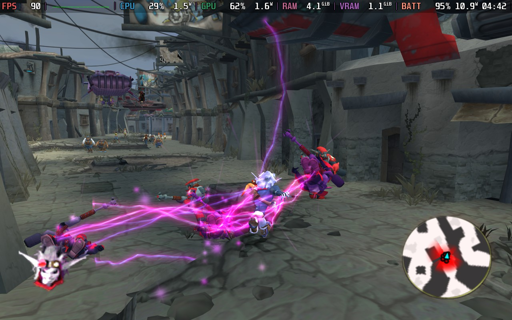
This is one of those things that after a few years, is going to become a heavyweight feature that every other storefront should have been working to have but for some reason haven’t started yet like Steam Input or WINE/Proton/Linux integration. I imagine in the near future retro-handhelds mostly abandoning Android for Linux and basing their specs and marketing around some analytics done on Steam games and the crowd-sourced game performance data. PS4 is in its 13th year. Blink and next thing you know you’ll be seeing cheap mini handhelds advertising playing vintage PS4 era video games on your bought from AliExpress PSP sized retro gaming handheld. It’ll be advertised like 98% of games released before 2020 have been found to run well on hardware as powerful as this gaming device (*according to Steam user data)

It shouldn’t be hard by 2030 I imagine; particularly if you primarily or exclusively use open source software. The RVA23 chips announced I usually see people comment them as having synthetic benchmark scores at about the Apple M1 level. I regularly use a laptop with a Skylake dual core in it and a Raspberry Pi 5 run off a microsd rather than a m.2 NVME hat. With that in mind, if RISC-V designs don’t get any better than that in the next 4 years, they’ll still be better than hardware that I will still be using. I still use a Raspberry Pi 3. At work every now and then I’ll throw a gitlab runner on a 10 year old desktop to have another thing building when things are busy
There are RISC-V developer boards today with PCI-E slots that you can throw in pretty much any AMD graphics card. The big distributions Debian, Fedora, Ubuntu, Red Hat - they all support risc-v. felix86 is equivalent to box64 and FEX for x86 to ARM:
https://felix86.com/felix86-26-04/
Software support is solid already today. It’s hardware availability for the announced RVA23 designs that’s not mature yet. 4 more years and I imagine in most cases the experience of Linux on RISC-V hardware not being much different than on ARM or x86 hardware


More popular. More users. Higher percentage of desktop/laptop PC users
Flatpak permissions handled in a very easy to use way. No silent failure. No need to go to flatseal and users understand why something didn’t work how they expected and what they need to do to fix it
Growing Linux userbase eventually results in great day one support for new products from Qualcomm, ARM mali GPUs, PowerVR, etc. They’ll want to be able to compete year after year with Intel and AMD someday
Someday native Linux games rather than WINE/Proton will become the norm
Popular media software categories continue seeing open source software gain mainstream/professional viability. Talking like Blender, Godot, Krita today. Someday stuff like Kdenlive, Scribus, Inkscape, Ardour, GIMP, Darktable, etc will breach some line of good enough functionality, interface design. Someday the user base will grow enough and enough will make it into industry with their experience and opinions
Someday more normal Linux phone OS’s like PostmarketOS will become a solid piece of the mobile pie. Like ~5%. Like how desktop Linux is today. Good usability but still working up to streamlined. That’ll be way better than today. In what I imagine would be well over a decade when a Linux phone is as popular as desktop Linux is today, it’ll actually be pretty easy to use like desktop Linux is today
I see everything through the lens of the difference in user experience and mainstream penetration of 2010 compared to today. Like Kdenlive of 2010 compared to today. 2010 Blender vs today’s Blender. 2010 OpenOffice compared to 2026 Libreoffice. Gaming with WINE in 2010 to today with Proton/WINE/Steam. Unity/KDE/GNOME/etc of 2010 compared to today.
Nice. Waiting for RVA23 boards with a PCI-E slot to become widely available so I can test out box64 on those
That newer open source driver is still far behind but is progressing. Those graphics cards will have a great new life with modern kernels someday
Looks like postmarketos already put in work to have systemd working in it. That takes care of my concerns there