

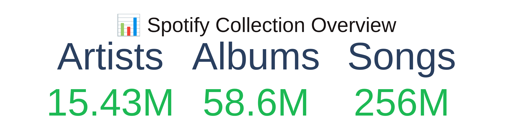
We backed up Spotify (metadata and music files). It’s distributed in bulk torrents (~300TB), grouped by popularity.
This release includes the largest publicly available music metadata database with 256 million tracks and 186 million unique ISRCs.
It’s the world’s first “preservation archive” for music which is fully open (meaning it can easily be mirrored by anyone with enough disk space), with 86 million music files, representing around 99.6% of listens.
Anyone knows if spotify metadata have BPM and keys?
Would love lmao. Just bought a second hand VDJ and I’m starting to experiment with mixxx, and I don’t know is the style I like (latincore and adjacents) or if the BPM detected of mixxx isn’t that good.
Good on you for starting that up! I wish you much success in your mixing and/or producing journey!
Both. Per the SQL schema printed in the article, table
track_audio_featureshas both fields tempo and key along with many other technicals. Worth checking out, it’s near the bottom of the page.BPM yes, keys I’m not so sure.
Yes, and it hasn’t been easy to dig up until recently. There were a few ways to search the “hidden” metadata fields that Spotify uses internally. But it definitely hasn’t been easy or straightforward.
Those hidden fields are how Spotify recommends similar artists. You have a few bands on repeat with specific instruments, chord progressions, and singer vocal range? Gee, maybe you’ll enjoy other bands that are similar to that…